
Explainer · November 5, 2026
Miami-Dade's $700 Million Property Tax Hole, Explained
By Carlos Vargas, Editor · Published November 5, 2026 · Miami, FL
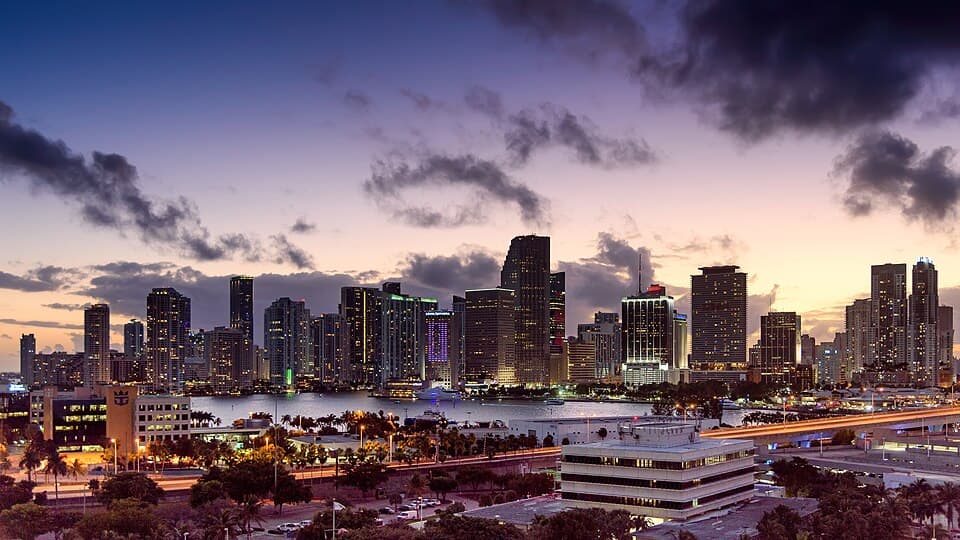
Downtown Miami, seat of Miami-Dade County government. The county estimates the new homestead exemption will cost it roughly $696.7 million a year in property tax revenue once fully phased in. Photo: SFL Today.
On Tuesday, Florida voters approved Amendment 3, the constitutional amendment that sharply raises the homestead exemption — the slice of a primary home's value that escapes property tax. Homeowners will feel it as relief. Miami-Dade County government feels it as arithmetic: by the county's own published estimate, it will collect about $385.8 million less in property taxes beginning in October 2027, rising to roughly $696.7 million less every year from October 2028 — the "$700 million hole" now making headlines. Here is what actually changed, and what happens next.
What Amendment 3 does
Today, a Florida homestead gets roughly $51,000 of its assessed value exempted from non-school property taxes. Amendment 3 replaces that with $150,000 in 2027 and $250,000 in 2028, with the $250,000 figure indexed to inflation from 2029. The amendment also lowers the annual cap on assessment increases for non-homestead property — rentals and commercial buildings — from 10 percent to 5 percent a year, and it delays the bigger exemption for new Florida residents until their fifth year of eligibility. School taxes are untouched: none of this reduces what schools collect.
The amendment takes effect January 1, 2027, and first shows up on the tax bills homeowners receive in November 2027. It cleared the 60 percent statewide threshold required for constitutional amendments — as we reported in our Florida election results explainer, it passed with about 62 percent of the vote.
Why the hole is so big in Miami-Dade
Property taxes are the fuel of county government. Miami-Dade manages an annual budget of approximately $14.3 billion, and property taxes fund a large share of the services residents use daily — fire rescue, the sheriff's office and 911, roads, transit, parks, and water and sewer infrastructure. When the taxable value of hundreds of thousands of homes drops by up to $250,000 each, the revenue loss is mechanical: same tax rate, smaller base, less money.
Miami-Dade is not alone. The state Legislature's Revenue Estimating Conference projects local governments statewide will collect about $4.9 billion less in the first year and roughly $11.8 billion less a year once the amendment is fully phased in. County governments carry most of it — about $7.7 billion of the annual statewide total at full phase-in — with cities and special districts making up the rest. Miami-Dade, the state's most populous county, gives up the most dollars of any county.
Broward and Palm Beach face the same math
Miami-Dade's hole is the largest in dollars, but it is not an outlier. The same ParcelMath analysis of the Revenue Estimating Conference figures puts the all-in annual loss at full phase-in — county government, cities, and special districts combined — at about $1.39 billion for Miami-Dade, $1.19 billion for Broward, and $1.07 billion for Palm Beach County. Every city hall in the three counties, from Hialeah to Boca Raton, is running the same calculation this fall: which services were being carried by the homestead tax base that voters just voted to shrink, and what fills the gap. Expect the region's 2027 budget season — normally a summer exercise — to start early and run loud, because the first planning decisions for the smaller revenue base get made a full year before the first reduced tax bill is mailed.
What the county can — and can't — do about it
The amendment sends no state money to replace the lost revenue. That leaves county and city leaders with the same short menu every local government in Florida now faces: raise tax rates on the remaining base (which shifts the burden toward renters, businesses, and higher-value homes rather than eliminating it), cut services and staff, draw on reserves, or find genuine efficiencies. A companion state law passed alongside the amendment also tightens the vote requirements for local budgets that grow, which narrows the rate-raising option further.
The timing matters. None of this hits the current budget — the first reduced bills arrive in the fall of 2027, and the full $696.7 million annual figure lands with the county budget year beginning October 2028. That gives Miami-Dade roughly two budget cycles to plan the adjustment, and residents should expect the debate to run through every county and city budget hearing between now and then. County budgets here are adopted each September for the fiscal year starting October 1, after public hearings where departments defend their lines — which means the first real Amendment 3 budget fight happens in the summer of 2027, a full year before the money actually shrinks. Watch those hearings: they are where abstract billions become specific decisions about stations, routes, hours, and headcounts.
What it means for you
- Homeowners with a homestead exemption will see noticeably lower non-school tax bills starting November 2027, and a bigger cut in 2028. Analysis by ParcelMath estimates a homestead assessed at $300,000 in Miami-Dade would save roughly $2,354 a year from 2028.
- Renters get no direct break — the exemption applies to homesteaded primary homes — though the lower 5 percent assessment cap on non-homestead property slows how fast rental property tax bills can climb.
- Everyone should expect a public fight over what county and city services look like at the new revenue level, with public safety, transit, and parks at the center of it.
Follow the county-by-county fallout on our Miami page, and see how Broward and Palm Beach are handling the same math on our Fort Lauderdale and Palm Beach pages.
Sources
- Miami-Dade County — "Amendment 3 and Miami-Dade County Services" (county estimates of $385.8 million and $696.7 million in reduced collections; county budget of approximately $14.3 billion), miamidade.gov.
- Florida Legislature Revenue Estimating Conference, July 10, 2026 — statewide projections of $4.9 billion in the first year rising to $11.8 billion a year at full phase-in.
- Florida Constitution / Amendment 3 text (CS/HJR 1-F) — exemption amounts, effective dates, and the non-homestead cap change.
- ParcelMath — county-by-county Amendment 3 impact study, 2026 (estimated savings for a $300,000 assessed homestead).
SFL Today Originals
All stories →Explainers and deep dives written by the SFL Today team — the background behind the headlines, from king tides and county budgets to the plans reshaping downtown West Palm Beach.
South Florida This Week: 5 Stories to Watch, November 2–8
Election Day decides Florida's governor and a Senate seat, the NTSB investigates the Palm Beach County Learjet crash, flood watches and king tides bookend the week, and No. 1 Miami plays at Notre Dame.
ExplainerKing Tides in South Florida, Explained: Why Streets Flood on Sunny Days
Why streets flood on sunny days every fall — when the highest tides hit Miami, Fort Lauderdale, and Palm Beach, and which neighborhoods flood first.
ExplainerBroward's Sheriff Fight, Explained: A Locked Door, a $900 Million Budget, and a Vote to Sue
The fight over the Broward Sheriff's $900 million budget, explained — from the locked door to the county's vote to sue.
ExplainerWest Palm Beach Downtown Master Plan Explained: More Growth Approved, 25-Story Waterfront Towers Rejected
West Palm Beach approved more downtown growth — and rejected the 25-story waterfront towers. What the new master plan actually means.
ExplainerSouth Florida's Three Counties, Explained: Miami-Dade, Broward, and Palm Beach
How the region's three counties actually work — who runs what, where the lines are, and why it matters where you live.
ExplainerRaul Castro Arrest Warrant in Florida Explained: The Brothers to the Rescue Case, 30 Years Later
The Brothers to the Rescue shootdown, the Florida arrest warrant for Raul Castro, and why the case is back — 30 years later.