
Deep Dive · October 21, 2026
Raul Castro Arrest Warrant in Florida Explained: The Brothers to the Rescue Case, 30 Years Later
By the SFL Today team · Published October 21, 2026 · Miami, FL
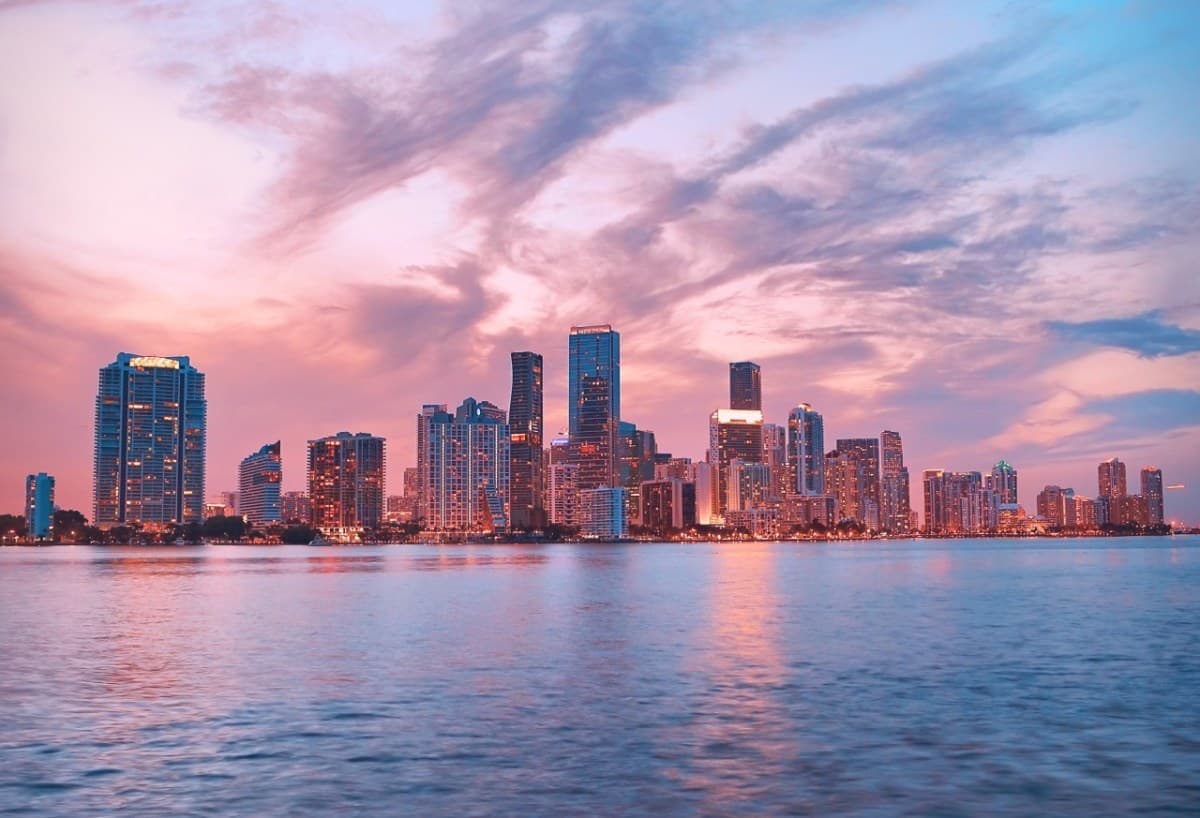
Miami over Biscayne Bay at sunset. Thirty years after two civilian planes were shot down over the Florida Straits, Florida has opened its own criminal case against the man officials say ordered it. Photo: Muzammil Soorma via Unsplash.
A Raul Castro arrest warrant issued in Florida this week charges the former Cuban leader with conspiracy to commit first-degree murder in the 1996 shootdown of two Brothers to the Rescue planes — a case that has never left Miami. The warrant, announced Monday, October 19 at Florida International University, makes Florida the second government this year to pursue Castro in court, after a federal indictment in May. Here is what the warrant actually says, what happened in 1996, and what it can — and cannot — do next.
What happened this week: a no-bond warrant, signed in Miami-Dade
Florida Attorney General James Uthmeier announced that the Office of Statewide Prosecution and the Florida Department of Law Enforcement secured the warrant for Raúl Modesto Castro Ruz, according to the attorney general’s release. The charge is one count of conspiracy to commit first-degree murder under Florida law — a first-degree felony — and the court ordered no bond.
The warrant was signed by Chief Judge Ariana Fajardo Orshan of the Eleventh Judicial Circuit, according to USA Today and the Palm Beach Post. Uthmeier said his office reopened the state investigation last year. “Raúl Castro ordered the murder of four Floridians in cold blood, and Florida will never stop pursuing accountability for that communist conspiracy,” Uthmeier said, naming the four men killed: Carlos Costa, Pablo Morales, Mario de la Peña, and Armando Alejandre Jr.
What happened in 1996: three planes out of Opa-Locka, two never came back
On February 24, 1996, three unarmed Cessna aircraft departed Opa-Locka Airport in Miami-Dade County, according to the affidavit summarized in the attorney general’s release. The planes belonged to Brothers to the Rescue, the Miami-based exile group whose volunteers flew humanitarian missions over the Florida Straits to spot Cubans fleeing the island.
After the aircraft crossed the 24th parallel — well outside Cuba’s territorial waters, Florida officials say — Cuban MiGs destroyed two of them with air-to-air missiles, killing all four men aboard. Both aircraft were traveling away from Cuba and received no warning despite contact with Havana air traffic control, according to the affidavit. The third plane escaped. Cuba has long maintained a different account, saying the aircraft violated Cuban territory, according to coverage of the federal case by Metro Punch. That dispute over where the planes were is now more than 30 years old — and it is still the legal heart of the case.
What the affidavit alleges: spies in South Florida and a standing order
The state’s theory is that the conspiracy ran through South Florida itself. According to the affidavit, Castro — then Cuba’s Minister of the Revolutionary Armed Forces and First Vice President — was a final decision-maker in the chain of command that authorized the shootdown, and gave senior military leaders standing orders quoted in the release as: “Fine, shoot them down at sea when they show up, and those who have the authority are not to consult anyone.”
The affidavit also alleges that Cuban intelligence agents in the Wasp Network, operating in Miami-Dade and Monroe counties, infiltrated Brothers to the Rescue, reported flight plans, and supported the plan Florida calls Operación Escorpión. Because elements of that alleged conspiracy occurred in the Eleventh and Sixteenth Judicial Circuits, the Office of Statewide Prosecution will take jurisdiction, the release says. The case remains active and further charges are possible.
Why Florida is filing now: the federal case came first
The state warrant did not arrive on its own. In May, federal prosecutors unsealed an indictment against Castro in Miami charging conspiracy to kill U.S. nationals, four counts of murder, and two counts of destruction of aircraft, with five other Cuban officials also named, according to Metro Punch. U.S. Attorney Jason A. Reding Quiñones said the federal indictment “laid the groundwork” for the state step, and that officials are pursuing “parallel federal and state prosecutions,” according to the attorney general’s release.
Monday’s announcement in Miami also landed in the middle of a week this newsroom flagged in our week-ahead preview: early voting is under way, and South Florida’s Cuban-American community remains one of the most closely watched electorates in the state. Uthmeier addressed that timing directly. “It was not an accident what happened. It was murder,” he said at the press conference, according to The Floridian. “The people of Miami have waited too long. The families have waited too long.”
Why it matters in Miami: a loss this community has carried for 30 years
Miami-Dade Sheriff Rosie Cordero-Stutz called the warrant “a historic step toward accountability,” saying the four men’s families and the Cuban American community “have carried this profound loss and refused to let the pursuit of justice fade,” according to the attorney general’s release. FDLE Special Agent in Charge Michael Stein made the same point from the investigative side: “The passage of time does not diminish the pursuit of justice.”
That is the local reality behind the legal filings. In Miami, the shootdown is not a history lesson — it is a family story, retold at anniversaries every February, including the 30th-anniversary commemoration this year with the victims’ families and South Florida’s congressional delegation. For readers catching up, our SFL Today news feed is following reaction from exile leaders and the families as the state case is detailed.
What happens next: a warrant is not an arrest
Be clear about the limits here. Castro, 95, is believed to be living in Havana, is officially retired from Cuban leadership, and is not in U.S. custody, according to The Floridian. Nothing in any of this week’s reporting indicates Cuba would hand him over, and the federal case in May carried the same caveat. The allegations in both cases have not been proven in court.
What the warrant does do is concrete: it puts Florida’s own charge, its own affidavit, and its own no-bond order on the record, so the state case can move the moment custody ever becomes possible — and so the families’ 30-year wait is answered with a Florida court document, not just a federal one. State officials say the investigation is active and more charges are possible. SFL Today will update this story in our Originals as filings, responses from Havana, or family statements become public.
Sources
- Florida Attorney General / FDLE release via EIN Presswire — warrant, charge, affidavit details, and official statements.
- USA Today — warrant signing, charge, and affidavit summary.
- Palm Beach Post — independent reporting of the same warrant and 1996 details.
- The Floridian — FIU press conference, additional Uthmeier and Cordero-Stutz quotes, and Castro’s status in Havana.
- Metro Punch — the May federal indictment and Cuba’s longstanding position.
- U.S. Rep. Carlos Giménez’s office — 30th-anniversary commemoration with the victims’ families.