
Explainer · October 25, 2026
King Tides in South Florida, Explained: Why the Streets Flood on Sunny Days
By the SFL Today team · Published October 25, 2026 · Miami, FL
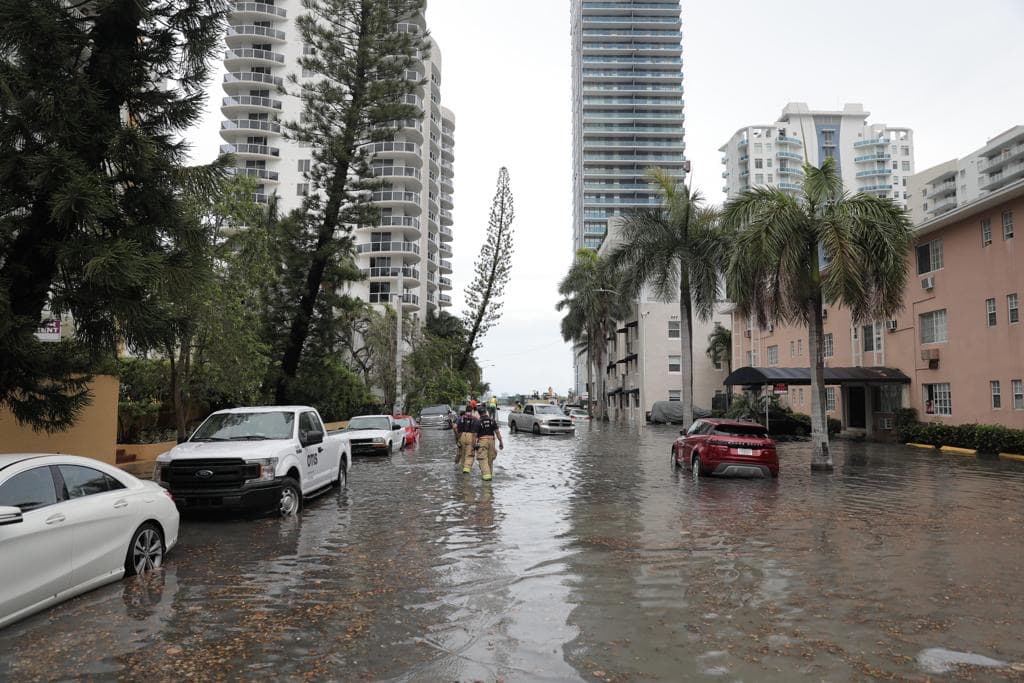
A South Florida street under water during king tide season. No storm required — the tide alone can push seawater up through storm drains and over seawalls. Photo: SFL Today.
If you drove through saltwater on a cloudless morning this week, you met the king tides. As this story publishes, the National Weather Service has a coastal flood warning in effect for South Florida through Monday and Tuesday's high tides, with a high surf advisory alongside it and breakers of 8 to 10 feet expected on the Palm Beach coast. This is the heart of king tide season — the weeks each fall when South Florida's highest tides of the year roll in. Here is what is actually happening, when it peaks, and what to do about it.
What a king tide actually is
"King tide" is not a scientific term — scientists call them perigean spring tides. Twice a month, at the new and full moons, the sun, moon, and Earth line up and their combined pull produces higher high tides (spring tides). A few times a year, that alignment happens while the moon is at perigee — its closest point to Earth — and the pull is stronger still. In South Florida those biggest tides cluster in the fall, roughly September through November, when seasonal winds and warm ocean water pile a few extra inches against the coast.
The result is sometimes called "sunny-day flooding": no rain, no storm, just the ocean arriving on schedule — up through storm drains, over low seawalls, and across the lowest streets, typically for an hour or two around each high tide, twice a day.
Where it floods first
The pattern is predictable because the lowest ground floods first. In Miami-Dade, that means Miami Beach's low west-side streets, Brickell's bayfront roads, and older low-lying neighborhoods like Shorecrest. In Broward, Fort Lauderdale's Las Olas Isles and low canal neighborhoods are the usual first reports — the city has built its recent infrastructure program around exactly this. In Palm Beach County, low streets in Delray Beach, Boynton Beach, and along the Intracoastal see water early. If your street flooded last October, plan on it flooding this October.
King tide flooding also gets worse when it rains at high tide — the storm drains that should empty the street are busy being pushed backward by the sea — and when onshore winds stack water against the coast, as the current forecast describes. That is why this week's tides, paired with downpours, are expected to reach major flood stage in spots on Monday and Tuesday.
What to do — and what not to do
- Don't drive through it. Six inches of water can stall a car, and this is saltwater: it corrodes brakes, underbody, and electronics, and the damage shows up weeks later. If you do drive through, rinse the underbody with fresh water the same day.
- Move the car, not just the valuables. Flood-prone streets usually have higher ground a few blocks away. During king tide weeks, several coastal cities open free or discounted garage parking for residents — check your city's site before the highest tides, not during them.
- Time your trips around high tide. Flooding peaks in the window around each high tide and drains as the tide falls. Tide times for your nearest station are published daily; our news page carries the active National Weather Service alerts.
- Keep documents and chargers off the floor in ground-floor homes in known flood spots, and know that floodwater on streets often includes storm-drain overflow — wash shoes and paws that walk through it.
The longer story
King tides have always happened. What has changed is the baseline: sea level at South Florida gauges has risen measurably over the past few decades, so a tide that once wet the seawall now crosses the street. That is why cities across the three counties are raising roads, rebuilding seawalls higher, and installing pumps and tidal valves — and why scientists describe today's king tides as a preview of what ordinary high tides will look like in the future. However you read the long term, the short term is simple: this is a twice-a-day, plan-around-it fact of fall life in South Florida, and this week is one of the year's biggest rounds.
Sources
- National Weather Service, Miami — coastal flood warning, high surf advisory, and rip current statement in effect October 25–28, 2026, as carried on our news page.
- NOAA — perigean spring tides ("king tides"): what they are and when they occur.
- City of Fort Lauderdale and City of Miami Beach — king tide preparedness and resident parking programs.
SFL Today compiles and contextualizes reporting from these sources. For live conditions, follow the official alerts — and follow Miami, Fort Lauderdale, and Palm Beach coverage as this week's tides peak.