
Guide · November 5, 2026
Brightline in South Florida: A Rider's Guide
By Carlos Vargas, Editor · Published November 5, 2026 · Miami, FL
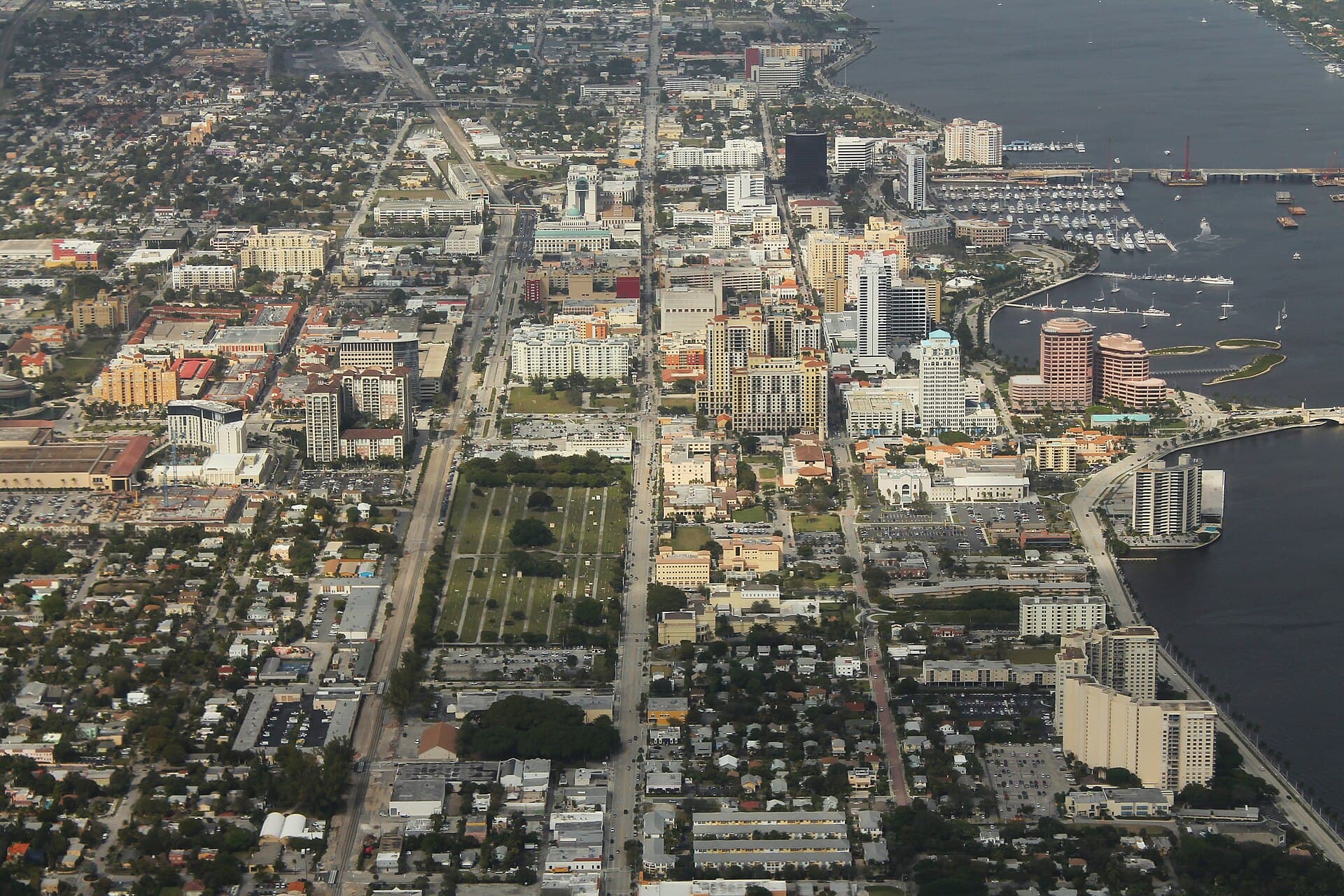
Downtown West Palm Beach — Brightline's original northern terminus and still one of the busiest stations on the line. The full route now runs about 235 miles from downtown Miami to Orlando International Airport. Photo: SFL Today.
It is the one piece of South Florida infrastructure that feels like it belongs to a bigger, better-organized region: a privately run, higher-speed train linking downtown Miami to Orlando, with four stops in between. Brightline completed the full Miami-to-Orlando service in September 2023, and by now it is simply how a lot of South Floridians visit Orlando, catch a cruise, or skip the I-95 drive entirely. If you have not ridden yet, here is exactly how it works — the stations, the fare classes, and what it really costs.
The six stations, south to north
- MiamiCentral — 600 NW 1st Avenue, downtown Miami. The southern terminus, connected to the Metromover and a short ride from Brickell and South Beach.
- Aventura — by Aventura Mall, serving north Miami-Dade and southern Broward without the trip downtown.
- Fort Lauderdale — downtown at 101 NW 2nd Avenue, walking distance to the Riverwalk and Las Olas.
- Boca Raton — opened in 2022, serving Boca and southern Palm Beach County.
- West Palm Beach — the original terminus from the 2018 launch era, walking distance to Clematis Street.
- Orlando — inside Orlando International Airport by Terminal C (10705 Jeff Fuqua Boulevard). Note that the Orlando station is at the airport, not downtown or near the theme parks — you still need a ride for that last leg.
The full Miami-to-Orlando run covers about 235 miles and is scheduled at roughly three and a half hours on trains that make every stop; West Palm Beach to Orlando runs about two hours. Brightline's schedule lists around 20 daily departures between Orlando and South Florida, and the fastest segment — the dedicated track between Cocoa and Orlando — tops out at 125 mph. Check the timetable in the app for your date: the stopping pattern decides the exact time.
What it costs
Brightline prices like an airline: fares are dynamic, rising with demand and as departure nears, and the cheapest buckets sell first. As a realistic guide, published fare trackers put Miami-to-Orlando one-way fares at from about $79 in SMART and $149 in PREMIUM, while shorter South Florida hops are far cheaper — Miami to West Palm Beach from about $29 in SMART, for example. Promotional SMART Saver fares dip lower still — this fall's offer started at $39 one-way between South Florida and Orlando for tickets booked at least 14 days ahead. The honest rule: there is no single Brightline price, so price your actual date in the app or at gobrightline.com before deciding.
The fare classes, decoded
- SMART Saver — the cheapest seat in the standard cabin. The trade-off is rigidity: no changes, no cancellations, no seat selection.
- SMART Select — the same cabin with an exit plan: cancel for a 75 percent credit to your Brightline Wallet, or change for a fee plus any fare difference.
- SMART Flex — full flexibility: qualifying cancellations refund 100 percent to your original payment method, with free same-day changes subject to availability.
- PREMIUM — a separate cabin with wider seats and more legroom, access to the station PREMIUM lounges, and complimentary food and drinks on board, including beer and wine. On the Orlando route it also adds checked-bag allowances the SMART fares don't match.
Across classes you get free Wi-Fi and power at the seat. Traveling with a pet is allowed for a fee — $45 on trips to or from Orlando and $10 within South Florida, per Brightline's pet page. Parking is extra: Miami lists $12 pre-paid daily parking in its current fee schedule, and Orlando's airport garages and lots price separately.
How a trip actually goes
Book in the app or on the website and you get a QR code — that is your ticket. Arrive at the station, pass a quick security check, wait in a lounge-style hall that feels more airport gate than train platform, and board when your train is called. Bags ride with you in the cabin on the standard fares. Most local riders use it three ways: Orlando trips without the Turnpike slog, cruise passengers riding to PortMiami or Port Everglades days, and intra–South Florida hops — Fort Lauderdale to Miami in about half an hour — that delete the worst commute in the region from your day. For what's around the stations, see our Miami, Fort Lauderdale, and Palm Beach pages and the local business directory.
Train, car, or plane? The honest comparison
Driving Miami to Orlando is about four hours on a good day and well past five on a bad one, once I-95 and Turnpike traffic do their work — plus tolls, gas, and parking at the other end. Flying is an hour in the air wrapped in the usual airport buffer at both ends, and the flight lands at the same airport Brightline serves. The train's roughly three and a half hours, station to station, sits in the middle on the clock and ahead of both on stress: no security lines, no middle seats, and you can work or sleep the whole way. Where Brightline loses is flexibility — the last train is the last train, and if your plans live past it, the car wins. Where it wins biggest is the short hops: Miami to Fort Lauderdale or West Palm Beach replaces a drive nobody enjoys with a ride measured in minutes, at prices that compete with parking at the destination.
Sources
- Brightline — station pages and schedule (gobrightline.com): station addresses, roughly 20 daily departures, Orlando station at Terminal C; fee schedule updated October 2, 2026 (Miami parking).
- Brightline — pet policy page (pet fees to/from Orlando and within South Florida).
- Published 2026 fare trackers (PlanetPatrick Brightline Orlando guide; CityBySix Miami–Orlando fares) for the from-price ranges and SMART fare-type rules cited above. Fares are dynamic; the operator's own booking flow is the final word.
SFL Today Originals
All stories →Explainers and deep dives written by the SFL Today team — the background behind the headlines, from king tides and county budgets to the plans reshaping downtown West Palm Beach.
South Florida This Week: 5 Stories to Watch, November 2–8
Election Day decides Florida's governor and a Senate seat, the NTSB investigates the Palm Beach County Learjet crash, flood watches and king tides bookend the week, and No. 1 Miami plays at Notre Dame.
ExplainerKing Tides in South Florida, Explained: Why Streets Flood on Sunny Days
Why streets flood on sunny days every fall — when the highest tides hit Miami, Fort Lauderdale, and Palm Beach, and which neighborhoods flood first.
ExplainerBroward's Sheriff Fight, Explained: A Locked Door, a $900 Million Budget, and a Vote to Sue
The fight over the Broward Sheriff's $900 million budget, explained — from the locked door to the county's vote to sue.
ExplainerWest Palm Beach Downtown Master Plan Explained: More Growth Approved, 25-Story Waterfront Towers Rejected
West Palm Beach approved more downtown growth — and rejected the 25-story waterfront towers. What the new master plan actually means.
ExplainerSouth Florida's Three Counties, Explained: Miami-Dade, Broward, and Palm Beach
How the region's three counties actually work — who runs what, where the lines are, and why it matters where you live.
ExplainerRaul Castro Arrest Warrant in Florida Explained: The Brothers to the Rescue Case, 30 Years Later
The Brothers to the Rescue shootdown, the Florida arrest warrant for Raul Castro, and why the case is back — 30 years later.